Water Heater Repair in Flushing, Queens
Fast diagnostics and expert repairs for gas and electric water heaters across Flushing. Resolving no-hot-water emergencies, tank leaks, failing thermostats, pilot light issues, and sediment buildup.
Call (315) 202-8009 to Schedule Service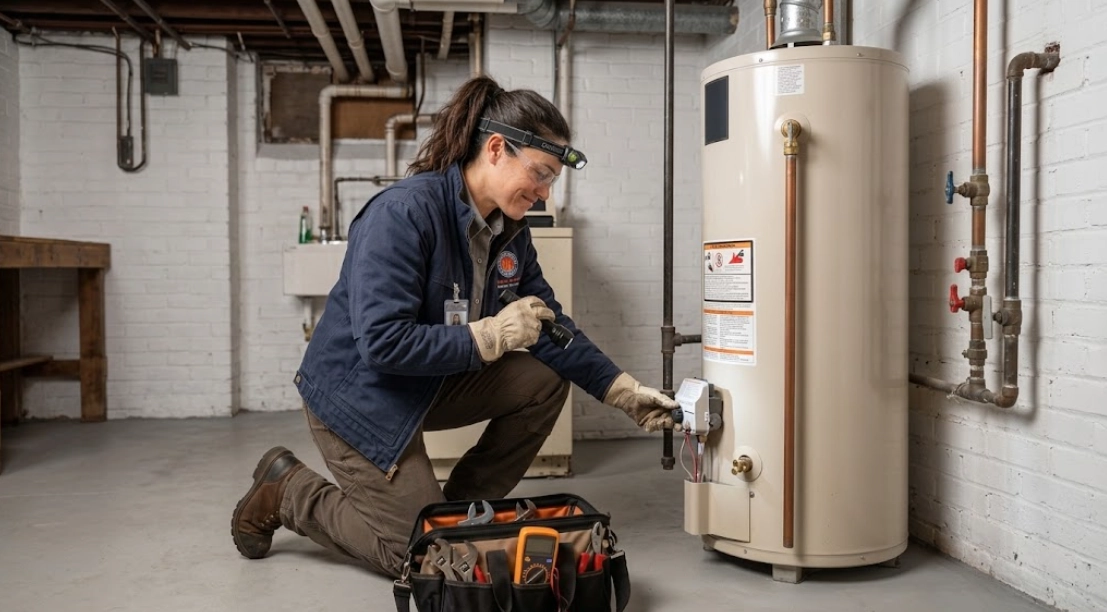
Dependable Hot Water Solutions for Flushing Properties
Hot water is an essential necessity in every Flushing residence, whether in a high-rise condominium off Main Street, a multi-family property along Kissena Boulevard, or a single-family house near Bowne Park. Due to heavy daily domestic use, water heaters in multi-unit dwellings endure constant cycling that stresses burner assemblies, heating elements, and safety valves.
When hot water suddenly turns lukewarm or stops flowing entirely, prompt troubleshooting identifies whether the fault lies in a replaceable component or an internal tank breach. If water pooling around the heater base originates from an overhead supply line rather than the appliance itself, our precision pipe leak repair can resolve the issue without unnecessary equipment replacement.
Signs of Water Heater Trouble
Symptoms of System Failure
- Water running completely cold or running out within minutes of starting a shower.
- Water pooling in the drain pan or along the basement floor near the heater base.
- Popping, rumbling, or boiling noises coming from inside the tank during heating cycles.
- Rust-colored or cloudy hot water from faucets, while cold water runs clear.
- Pilot light repeatedly blowing out or refusing to ignite on gas models.
Gas vs. Electric Configurations
Atmospheric Gas Water Heaters: Widely installed in Queens basements. Common issues include thermocouple degradation, burner soot, pilot tube blockages, and draft hood spillage.
Electric Water Heaters: Often utilized in co-op units lacking dedicated flues. Failures typically stem from burned-out upper or lower heating elements or tripped high-limit reset switches.
Diagnostic & Repair Process: Step by Step
Our systematic troubleshooting isolates the root problem efficiently and safely:
-
1
Safety Check & Visual Inspection
We check for fuel gas odors, flue draft adequacy, electrical connections, and external signs of corrosion around pipe connections and relief valves.
-
2
Thermal & Electrical Testing
For electric units, we test element resistance and thermostat continuity using digital multimeters. For gas units, we test millivolt output from the thermocouple and check gas manifold pressures.
-
3
Component Servicing or Replacement
Worn elements, faulty thermostats, failing TPR valves, or defective gas control valves are replaced with commercial-grade manufacturer-certified components.
-
4
Flush & Combustion Verification
Sediment is flushed from the tank bottom, burner assemblies are tuned for a clean blue flame, and the water temperature is calibrated to safe domestic standards (120°F).
No Hot Water or Heater Leaking?
Contact our Flushing plumbing team immediately for fast diagnostic assistance and repair.
Call (315) 202-8009Repair vs. Replacement: What Makes Economic Sense?
When an issue is isolated to a component—such as a $50 thermocouple, an electric element, or a leaking drain valve—a repair is straightforward and cost-effective. However, when the steel tank itself corrodes through its glass protective lining, water leaks through the bottom seam or outer jacket. In such cases, the tank cannot be patched safely, and a new water heater installation is necessary.
In homes with central heating systems, domestic hot water may also be produced via an indirect tank connected to a boiler. If your system involves central hydronic or steam heat, explore our dedicated boiler repair in Flushing for comprehensive mechanical maintenance.
Cost and Scope Factors
Water heater repair investments depend on unit type (atmospheric gas, power-vent, or electric), fuel line condition, venting chimney configuration, accessibility within tight pre-war utility closets, and required safety upgrades such as expansion tanks and thermal relief piping.
Frequently Asked Questions About Water Heater Repair
Water pooling beneath the tank usually signifies that internal corrosion has perforated the steel tank wall, requiring a full replacement. Alternatively, the leak may stem from a failing drain valve or dripping temperature-pressure relief discharge pipe, both of which can be repaired.
A worn thermocouple that fails to generate enough millivolts to hold the safety magnet open is the most frequent cause. Other factors include dirty pilot orifices, defective gas controls, and downdrafts in the flue chimney.
Mineral sediment settles at the bottom of the tank, covering the lower heating element. Unable to dissipate heat into the water, the element overheats and burns out the internal resistance wire.
If your water heater is over 10 years old and experiences a major component failure or leaks from the tank vessel, replacing it with an energy-efficient modern unit provides greater reliability and lower operating costs.